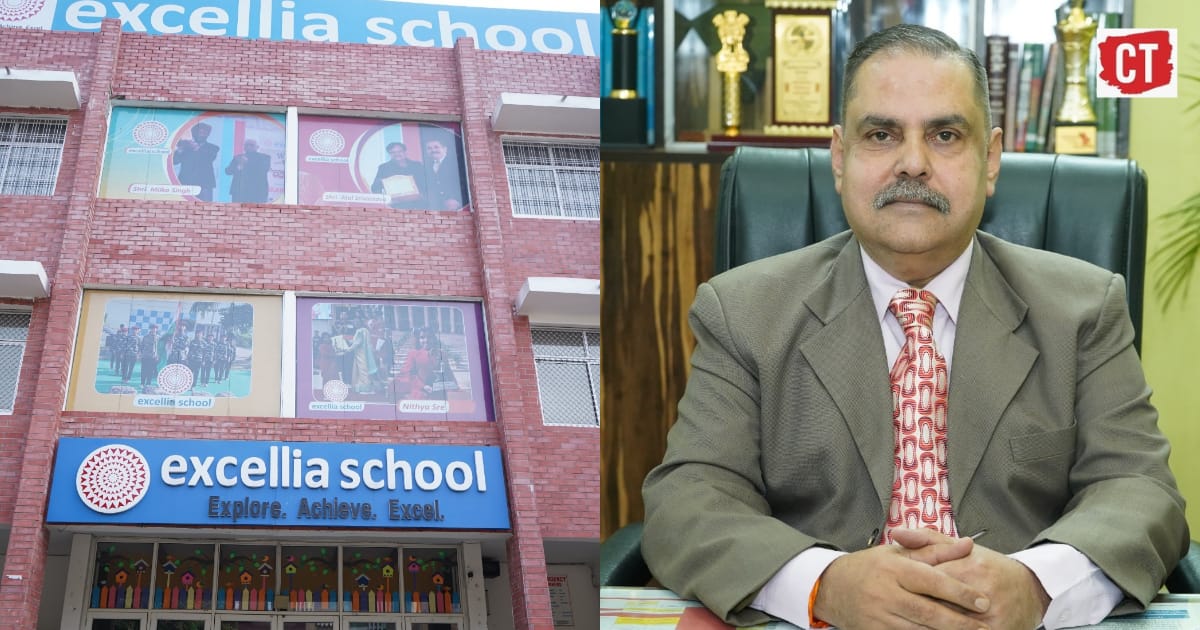
Campus Times | LucknowUnder the dynamic leadership of Shri Asheesh Pathak, Excellia School has emerged as one of Lucknow’s progressive CBSE institutions committed to experiential learning, robotics education, and holistic student development. With over 33 years of professional experience, Shri Pathak has reinforced the school’s foundation on discipline, transparency, and uncompromising academic quality.A Vision Rooted in DeterminationEstablished in 2012 by Late Shri Daya Shankar Pathak, Excellia School was built on a vision of holistic and practical education. Having walked 5–10 kilometers daily during his own schooling years, the founder deeply understood the value of accessible and meaningful education. His dream was to build an institution where academics, sports, creativity, and practical exposure move together.Strengthening the LegacyAround 2015, when the founder’s health declined, Shri Asheesh Pathak assumed full responsibility for carrying the vision forward. Since then, the institution has seen structured academic growth, improved systems, and a sharper focus on discipline-driven excellence. He strongly believes that honesty and discipline are non-negotiable pillars of long-term institutional success.Learning Beyond TextbooksExcellia School promotes the philosophy of “learning by doing.” Along with strong academic instruction, students receive structured training in badminton, volleyball, table tennis, and chess. Well-equipped science and robotics laboratories provide hands-on exposure, helping students develop conceptual clarity and confidence.Commitment to Quality & InnovationThe school carefully selects teachers based on expertise, teaching methodology, and dedication. Regular assessments and counseling sessions ensure that students grow according to their interests and potential. New technologies are adopted thoughtfully, keeping long-term academic quality in focus.Social CommitmentExcellia School organizes blood donation camps and runs a Chairman’s Scholarship Scheme, offering free education up to Class 12 for children from families without an earning member.Looking AheadWith the guiding motto Discovery, Achievement, and Excellence, the management envisions nurturing responsible, confident, and capable citizens. Under Shri Asheesh Pathak’s leadership, Excellia School continues to
Leadership
Campus Times | LucknowProfessor Govind Ji Pandey, Head of the Department at Babasaheb Bhimrao Ambedkar University (BBAU), Lucknow, has shared a nuanced and balanced perspective on the proposed UGC Caste Discrimination Bill, describing it as a legislation rooted in justice and equality, but one that requires certain refinements to address concerns of all sections of students.Speaking on the issue, Prof. Pandey said that laws and guidelines aimed at preventing caste-based discrimination have existed for a long time and their intent has always been positive. However, he pointed out that some provisions in the current UGC guidelines may lead to one-sided outcomes, which could create anxiety among students from the general category.He stressed that general category students should not be viewed as offenders by default and must be given the right to file complaints against false or malicious allegations. “If such safeguards are not ensured, the system may become imbalanced and could result in unnecessary distress for students,” he noted.Referring to the University Grants Commission (UGC) guidelines, Prof. Pandey said that while the spirit behind the guidelines is commendable, certain gaps need to be addressed to ensure that concerns of the general category are adequately resolved. According to him, Indian universities must remain spaces where education and free thinking continue to flourish without fear or prejudice.He also recalled that after the Rohith Vemula case, the Supreme Court of India had issued guidelines to protect students belonging to Scheduled Castes and Scheduled Tribes. In the current framework, these protections have been extended to include Other Backward Classes (OBCs) and Economically Weaker Sections (EWS) as well.However, Prof. Pandey raised an important question: if all major social categories are covered under the guidelines, who remains outside their ambit? “Are we to assume that a very small group of students is responsible for discrimination against