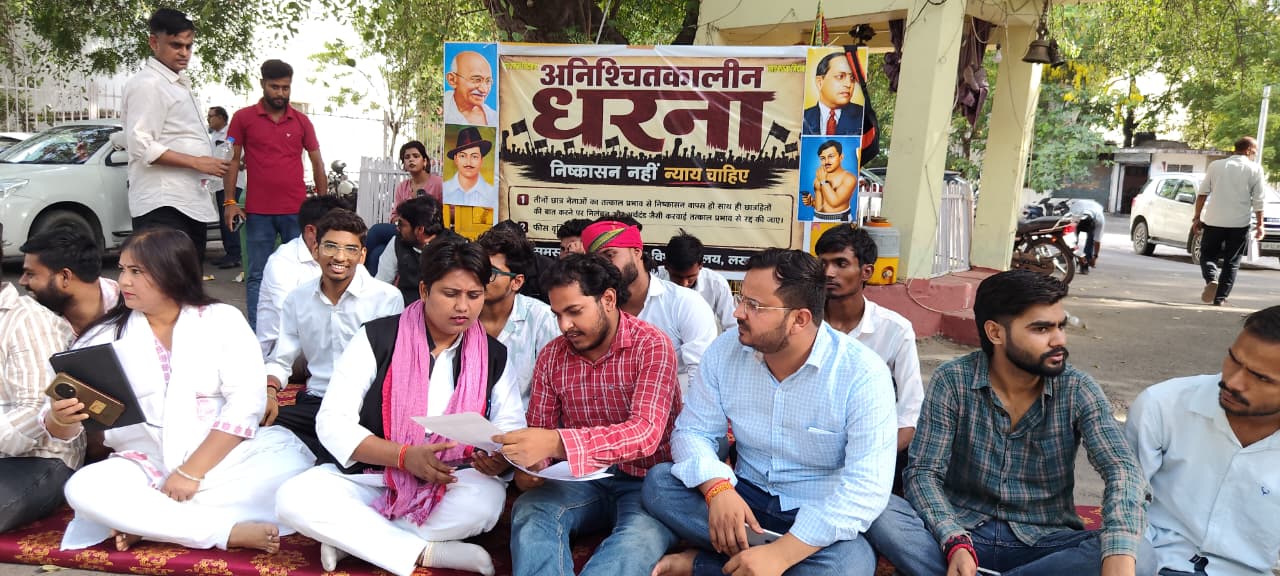
Professor Govind Ji Pandey Raises Concerns Over UGC Caste Discrimination Guidelines, Calls for Balanced Reforms

Professor Govind Ji Pandey, Head of the Department at Babasaheb Bhimrao Ambedkar University (BBAU), Lucknow
Campus Times | Lucknow
Professor Govind Ji Pandey, Head of the Department at Babasaheb Bhimrao Ambedkar University (BBAU), Lucknow, has shared a nuanced and balanced perspective on the proposed UGC Caste Discrimination Bill, describing it as a legislation rooted in justice and equality, but one that requires certain refinements to address concerns of all sections of students.
Speaking on the issue, Prof. Pandey said that laws and guidelines aimed at preventing caste-based discrimination have existed for a long time and their intent has always been positive. However, he pointed out that some provisions in the current UGC guidelines may lead to one-sided outcomes, which could create anxiety among students from the general category.
He stressed that general category students should not be viewed as offenders by default and must be given the right to file complaints against false or malicious allegations. “If such safeguards are not ensured, the system may become imbalanced and could result in unnecessary distress for students,” he noted.
Referring to the University Grants Commission (UGC) guidelines, Prof. Pandey said that while the spirit behind the guidelines is commendable, certain gaps need to be addressed to ensure that concerns of the general category are adequately resolved. According to him, Indian universities must remain spaces where education and free thinking continue to flourish without fear or prejudice.
He also recalled that after the Rohith Vemula case, the Supreme Court of India had issued guidelines to protect students belonging to Scheduled Castes and Scheduled Tribes. In the current framework, these protections have been extended to include Other Backward Classes (OBCs) and Economically Weaker Sections (EWS) as well.
However, Prof. Pandey raised an important question: if all major social categories are covered under the guidelines, who remains outside their ambit? “Are we to assume that a very small group of students is responsible for discrimination against everyone else? This assumption does not seem logical and may lead to confusion,” he remarked.
Emphasizing his position as an academic rather than a political commentator, Prof. Pandey clarified that he has no comments on any political ideology or party, including the Narendra Modi Government. He said that any government, irrespective of the party in power, must prioritize listening to students’ concerns and resolving them effectively.
“If students remain anxious or fearful, their focus on studies will naturally decline, and the sense of harmony on campus will weaken,” he said, adding that campus harmony is essential for a healthy academic environment.
Citing constitutional values, Prof. Pandey reiterated that the Indian Constitution guarantees equal rights to all citizens. “No law suggests that allegations without evidence should leave the accused without any remedy. Fairness must exist on both sides,” he asserted.
Concluding his remarks, Prof. Pandey emphasized that universities must strive to create an environment of respect, affection, and mutual trust. “We are all Indians. If we genuinely uphold this spirit, the need for excessive guidelines will diminish. We should refrain from defaming, condemning, or oppressing one another. True harmony will come from empathy, not fear,” he said.
He expressed confidence that the UGC and the government will address the existing ambiguities in time, ensuring that the guidelines remain just, inclusive, and supportive of a peaceful academic ecosystem.
Related to this topic: