Bridging Health Gaps: BBAU Vice-Chancellor Releases Book on Tribal Healthcare
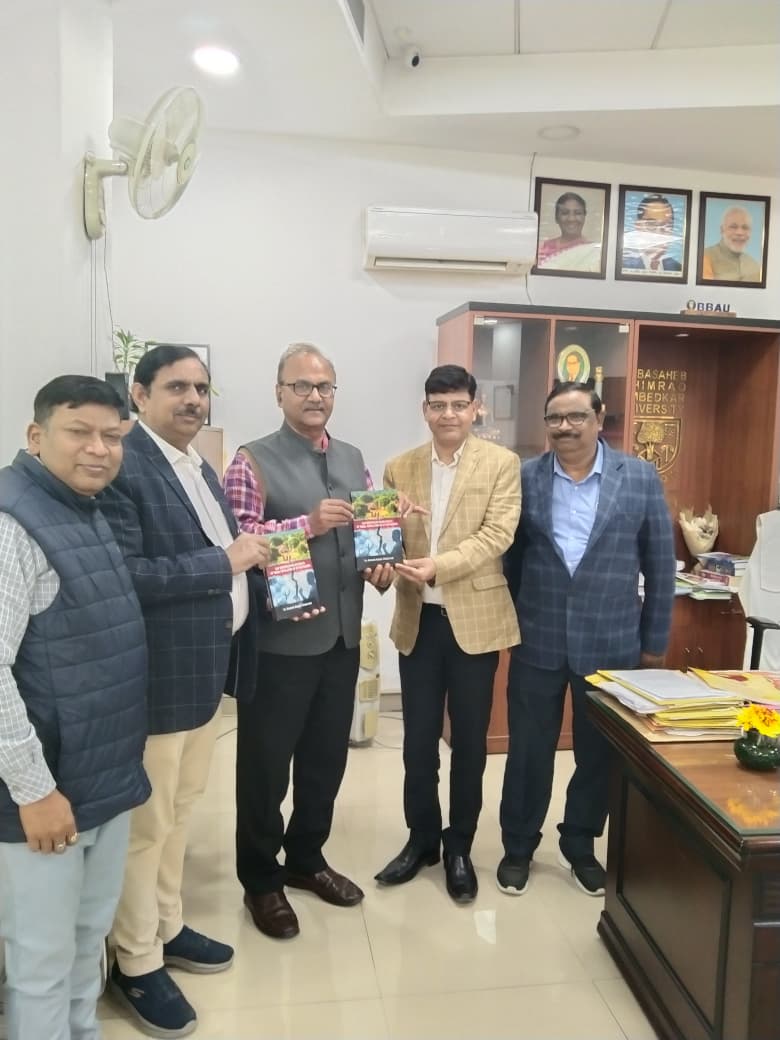
In a significant academic achievement, the Vice-Chancellor of Babasaheb Bhimrao Ambedkar University (BBAU), Prof. Raj Kumar Mittal, congratulated Dr. Ramesh Kumar Chaturvedi on the publication of his new book titled Gap Identification on Health of Tribal Population of Uttar Pradesh. The core recommendation of this book is establishment of Jan Aushadhi Kendra, Health Mitras and Mobile medical unite in remote tribal areas, for the betterment of the health care facilities of tribal.

Campus Times| Lucknow
The book presents the findings of a contemporary research project funded by the Ministry of Tribal Affairs, Government of India, and the Uttar Pradesh Scheduled Castes and Scheduled Tribes Research and Training Institute, Lucknow.
Recognized by International Journal
Adding to the university’s pride, the research findings have been approved by the globally reputed Journal of Racial and Ethnic Health Disparities, published by Springer Nature. The journal is widely recognized for publishing critical studies related to health disparities among indigenous, tribal, and ethnic communities worldwide. University officials termed this international recognition as a milestone, reflecting the growing global relevance of research conducted at BBAU.
Tribal Health Challenges in Uttar Pradesh
Dr. Chaturvedi’s book provides a detailed analysis of the health conditions of tribal communities in Uttar Pradesh. It highlights the stark disparities between tribal and non-tribal populations across several health indicators. The research points out that limited access to healthcare facilities, lack of infrastructure, and geographical isolation remain major barriers affecting the overall well-being of tribal communities in the state.
Solutions to Bridge the Health Gap
Beyond identifying the gaps, the book also suggests practical and implementable solutions. Key recommendations include
1. Establishment of mobile medical units in remote tribal areas
2. Appointment of community-based health volunteers or health mitras
3. Setting up Jan Aushadhi Kendra in tribal-dominated regions
According to the research, these measures can significantly improve healthcare accessibility and quality, helping bridge the existing health gap.
Pride for the University
The university administration described the publication as a proud moment for BBAU and expressed confidence that the research would contribute meaningfully to policymaking and improving the health status of tribal communities in Uttar Pradesh.
With increasing focus on tribal welfare and public health reforms, this research-based book is expected to play an important role in shaping future interventions aimed at reducing health disparities in the state
Related to this topic: