Lucknow University students develop low-cost plastic-to-fuel machine and disaster-ready smart traffic system
Two student-led innovations aim to tackle road safety challenges in remote regions and transform plastic waste into a valuable energy resource.

Campus Times | Lucknow
Students of the Faculty of Engineering and Technology (FoET), Lucknow University, have developed two innovative and cost-effective technologies aimed at addressing challenges related to road safety, disaster management, and plastic waste disposal. The projects were created by final-year engineering students and demonstrate how academic research can be transformed into practical solutions for societal needs.
Smart traffic system for remote and disaster-prone areas
A team of Electronics and Communication Engineering students—Muskan, Gaurav, Amit, and Ayush—has developed a smart traffic management system designed to improve safety on blind turns, mountainous roads, and highways affected by natural disasters or construction work.
Developed under the guidance of Dr. Manoj Kumar Jain, the system uses Arduino Nano and LoRa (Long Range) communication technology to ensure reliable long-distance data transmission, even in areas where mobile networks and internet services are unavailable.
Powered entirely by solar energy, the model is designed for remote and electricity-deficient regions. It can provide early warnings to drivers, helping reduce the risk of accidents. According to the student developers, the technology could be particularly useful in hilly areas and emergency situations where conventional communication infrastructure is often disrupted.
Low-Cost plastic-to-fuel machine developed
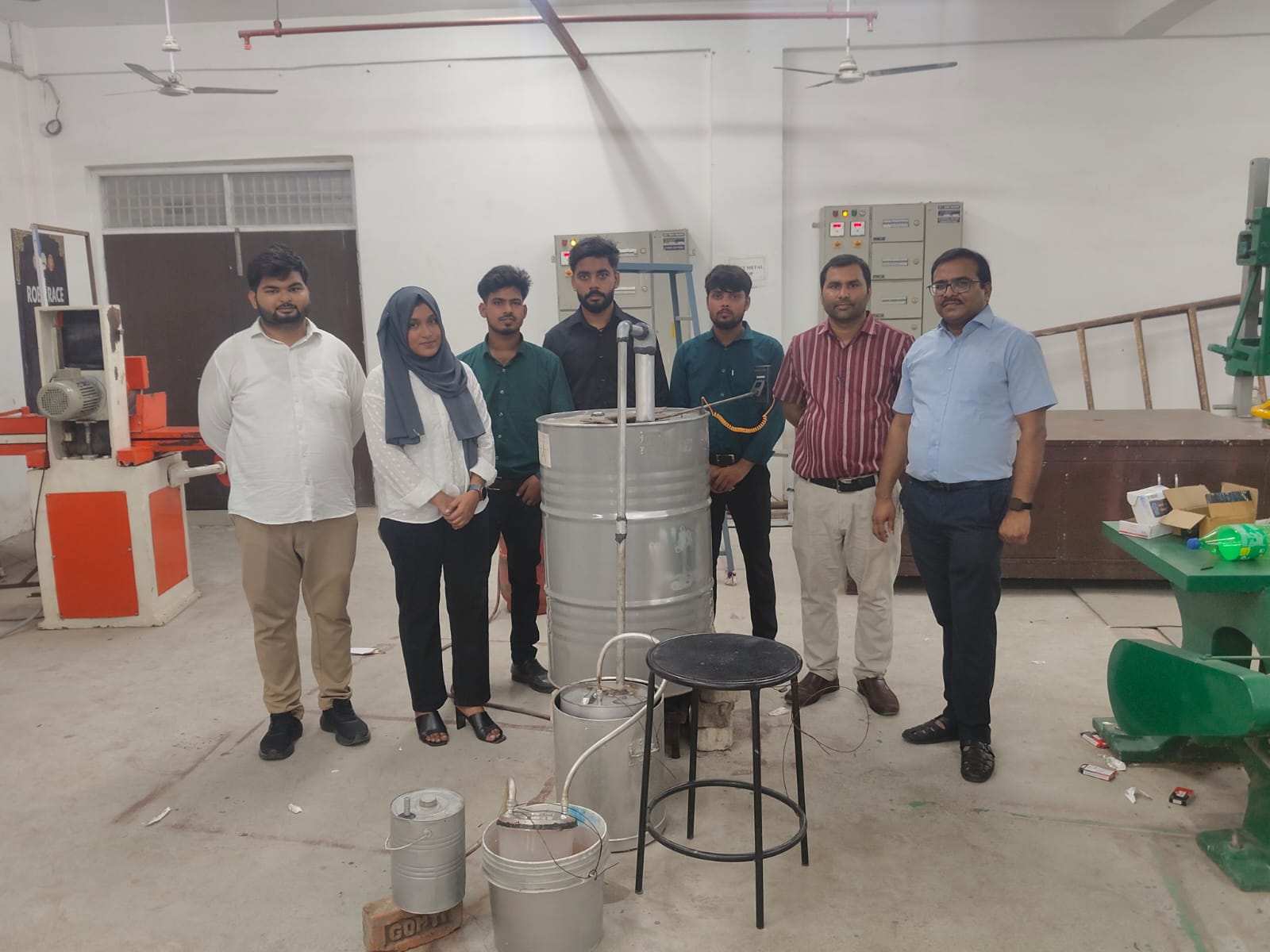
In another significant innovation, a team of Mechanical Engineering students—Iram Zeya, Vatsal Vishwakarma, Sumit Singh, Priyanshu, and Gaurav Rawat—has developed a Mini Pyrolysis Reactor capable of converting plastic waste into an alternative fuel similar to crude oil.
The project was carried out under the supervision of Dr. Praveen Kumar Rai and aims to tackle the growing problem of plastic pollution through an affordable technological solution. While commercial plastic-to-fuel systems often cost several lakhs of rupees, the students claim to have developed their prototype at a much lower cost.
The reactor processes HDPE and LDPE plastic waste by shredding it into small pieces and heating it in an oxygen-free environment at temperatures ranging from 350°C to 500°C. This process generates hydrocarbon gases, which are then condensed into liquid fuel through a condenser unit.
Recognition at international conference
The research project was presented at the fourth edition of CHEMTECHNOVA 2026, an international conference hosted by Harcourt Butler Technical University (HBTU), Kanpur. The innovation received appreciation from researchers and industry experts attending the event.
The team’s research paper has also been recommended for publication by Cambridge Scholars Publishing, highlighting the academic significance of the project.
University appreciates student innovations
Dean of the Faculty of Engineering and Technology, Prof. Satendra Pal Singh, congratulated the students on developing practical and affordable solutions to critical societal challenges.
He said that innovations such as the smart traffic management system and the plastic-to-fuel reactor reflect the potential of young engineers to contribute meaningfully to public safety, disaster preparedness, and environmental sustainability.
Related to this topic: