From renaissance to postmodernism: Lucknow scholars turn english literature into a 3D visual experience

An innovative patented educational device by Prof. R.P. Singh and Dr. Alka Singh blends sculpture, design and digital technology to make literary history more immersive for students.
Campus Times | Lucknow
In a unique fusion of literature, design and technology, two academicians from Lucknow have developed a patented educational display device that reimagines the way English literary history is taught and understood.
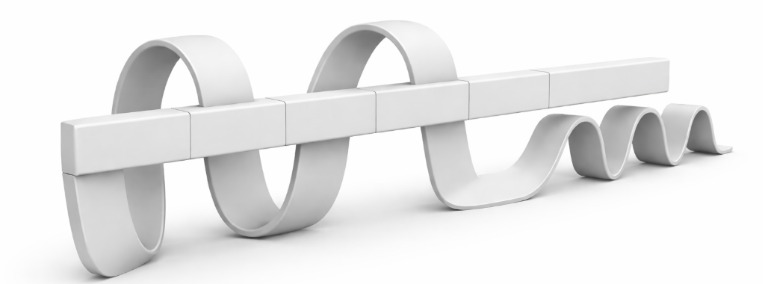
Prof. Ravindra Pratap Singh from the Department of English and Modern European Languages at the University of Lucknow, along with Dr. Alka Singh, faculty member at Dr. Ram Manohar Lohiya National Law University, has jointly invented a “Sculptural Educational Display Device” that visually presents the chronological journey of English literature through a three-dimensional architectural structure.
The invention aims to simplify the understanding of literary movements for Indian students by transforming abstract literary concepts into a visually engaging and interactive experience.
Literature through form and geometry
The patented device is based on a continuous metallic ribbon structure extending longitudinally across the installation. The ribbon forms a sequence of sculptural shapes — including waves, peaks, troughs, straight lines and chevron patterns — each symbolising a distinct literary era and its emotional or intellectual character.
According to Prof. Singh, the device has been specially designed to visually represent the evolution of English literature from the early and medieval periods to the Renaissance, Romantic, Modern and Postmodern eras through symbolic physical geometry integrated with digital presentation.
“The controlled variations in the ribbon’s curvature, rhythm and dimensions correspond to historical changes in literary thought, style and cultural influence,” he explained.
Representing literary movements visually
Each section of the structure reflects the dominant spirit of a literary age. The fluid and expressive curves depict emotional intensity, while sharper and more structured forms indicate logical and intellectual transitions in literary traditions.
The inventors believe the sculptural timeline will help students grasp the continuity and transformation of English literature more effectively than conventional classroom methods.
The device combines artistic representation with academic content, creating what the inventors describe as a “visual timeline” of English literary history while maintaining a unified architectural form.
Bridging education and innovation
The invention stands out as an example of interdisciplinary innovation in higher education, where humanities and technology intersect to create new teaching tools.
At a time when educators are exploring immersive and experiential learning methods, the patented device offers a fresh approach to literary studies by making historical and theoretical concepts more tangible and accessible.
With its blend of visual storytelling and academic interpretation, the innovation is expected to generate interest among educational institutions looking for creative pedagogical models in literature and humanities education.
Related to this topic: